
Pathways to Serving Tribal Communities: Building Relationships, Strengthening Communities

Recap by Denise Hudson, NACUC Board Member and Assistant Vice President, Consumer Lending, Tongass Federal Credit Union
What does it take to build meaningful, lasting relationships between credit unions and Tribal communities?
That was the focus of the Native American Credit Union Coalition's (NACUC) October 22 Sharing Circle, Pathways to Serving Tribal Communities. Credit union leaders from Montana, Alaska, and across the country came together to share experiences, lessons learned, and examples of what can happen when financial institutions listen to communities and commit to their long-term success.
The conversation featured Maria Valandra, Vice President of Community Partnerships and Indigenous Strategy at Clearwater Credit Union; Helen Mickel, President and CEO of Tongass Federal Credit Union; and Denise Hudson, Assistant Vice President of Consumer Lending at Tongass Federal Credit Union. All three are founding members and board members of NACUC.
While their experiences were different, a common message emerged: Meaningful partnerships begin with listening, grow through collaboration, and last through consistent commitment.
Supporting a Native-Led Credit Union: Clearwater and The Morning Star
Maria Valandra opened the discussion by sharing Clearwater Credit Union's partnership with The Morning Star Federal Credit Union, a Native-led institution serving the Northern Cheyenne Indian Reservation in Montana.
Chartered in 2022 and officially opened in May 2023, The Morning Star began with a teller window in a converted closet. Today, it has grown to three service locations, including locations in Lame Deer, Ashland, and Crow Agency.
As of December 31, 2025, The Morning Star reported approximately $2.9 million in assets, 2,344 members, and four full-time employees.
The credit union was established through the efforts of People's Partners for Community Development (PPCD), a Native-led nonprofit. When Clearwater CEO Jack Lawson learned about the effort, he offered Clearwater's support.
That offer grew into an ongoing mentorship relationship.
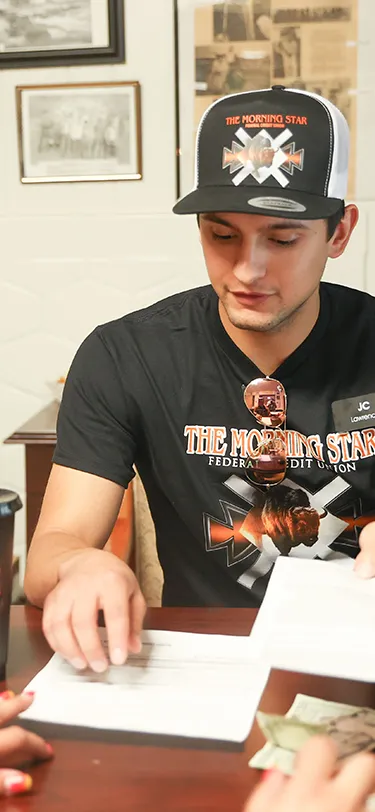
Clearwater assists The Morning Star with policies and procedures, employee training, lending operations, compliance, information technology, financial planning, and other operational needs. Its team provides regular guidance and helps connect The Morning Star with specialized resources.
Maria shared that Clearwater recently helped The Morning Star prepare for an external Bank Secrecy Act audit, including providing financial support to cover the audit's cost and connecting its staff with compliance expertise.
The partnership is also focused on long-term sustainability. Clearwater works alongside The Morning Star's leadership on budgeting, strategic planning, and building the skills needed to operate independently.
For Maria, the goal isn't to run another credit union. It's to help a Native-led institution build the capacity to serve its own communities successfully.
Her presentation also sparked an offer of support from another participant, demonstrating the value of bringing credit union professionals together to share their knowledge and resources.
Tongass Federal Credit Union: A Community That Invited Its Credit Union In
The conversation then moved to Southeast Alaska, where Helen Mickel shared how Tongass Federal Credit Union began serving the Metlakatla Indian Community.
In 2005, leaders from Metlakatla approached Tongass after the community's previous bank had closed its location due to economic conditions. Metlakatla, located on Annette Island, is Alaska's only Indian reserve. With approximately 1,400 residents, access to local financial services was especially important.
Tongass initially offered to help the community establish its own credit union. However, Tribal leaders had something else in mind. They wanted a Tongass branch. Rather than arriving with a predetermined plan, Tongass established a community advisory board and invited residents to share what they needed from a financial institution. Those conversations shaped the services the credit union would provide.
Residents wanted a convenient location to pay utility bills, assistance preparing income taxes, and financing that recognized the realities of the local commercial fishing industry.
Tongass responded by establishing utility payment services, offering Volunteer Income Tax Assistance (VITA), and developing approaches to income verification that accommodated commercial fishermen, including the use of fish tickets and profit-and-loss statements.
These weren't necessarily services Tongass would have identified on its own. They came directly from listening to the people who would use them.
A Permanent Investment in Metlakatla
Denise Hudson, a member of the Metlakatla Indian Community who has worked for Tongass for more than 18 years, shared what the credit union's growth looked like from inside the community.
Tongass initially operated from half of the former bank building. As membership grew, so did demand for services. Hudson recalled lines stretching out the branch door, down the accessibility ramp, and into the parking lot. The branch had simply outgrown its space.
In 2012, Tongass opened a new $1.2 million facility built on trust land. Community members helped shape the building's design, requesting practical features such as a drive-through and architectural elements and signage that reflected their culture.
For residents, the investment represented much more than a new building. It demonstrated that Tongass believed in the community and intended to remain for the long term.
The relationship also influenced the credit union's identity.
Metlakatla artist David R. Boxley created the Spirit of the Tongass design, which is now featured throughout the credit union. Its accompanying message, written by former Tsimshian board member Gavin Hudson, emphasizes the interconnectedness of Southeast Alaska's people and environment.
One passage particularly resonates with Denise:
“People, like trees, stand strongest when we stand together, united.”

Hudson described the personal pride she feels seeing her people's artwork represented throughout Tongass, even on her own debit card. For her, the artwork is more than branding. It represents belonging and the shared values of community, cooperation, and helping one another. It also illustrates how a relationship with a Tribal community can help shape the identity and practices of an entire financial institution.
Financial Education That Reaches Across Generations
One of the most memorable moments of the Sharing Circle came when Denise shared the story of a local fisherman who had worked for years, earned a good living, and owned property, but had no credit history.
His dream was to own a home.
After learning about his goals during a conversation at the credit union, Denise helped him begin building credit with a credit-builder loan and a secured credit card. Six months later, he had established an A-tier credit score. Within approximately two years, he purchased his first home. He later acquired rental properties and was a respected leader in his community.
The story didn't end there.
Years later, his son followed the same credit-building path. With a credit-builder loan and secured credit card, he established credit and eventually financed a commercial fishing vessel through Tongass, creating opportunities to provide for his own family. What began as one conversation at the credit union helped support financial progress across two generations.

Denise also shared how Tongass invests in young people through financial education, including Reality Fairs for high school juniors and seniors. Students experience budgeting and financial decision-making firsthand, often leaving with one particularly memorable realization: kids are expensive! Another former student who participated in Denise's credit-building education went on to become a Tongass branch manager.
These examples highlighted the importance of relationships that extend beyond individual transactions. Financial education, accessible products, and ongoing guidance can help members achieve goals that once seemed out of reach.
Measuring Success Beyond the Numbers
During the presentation, Denise shared that Metlakatla's median credit score increased by 74 points between 2005 and 2023. Although many factors influence credit scores, the increase offers an encouraging measure of financial progress during Tongass's years of service to the community.
As the only financial institution physically located in Metlakatla, Tongass has become an important resource for residents seeking to establish credit, finance vehicles and fishing vessels, and pursue other financial goals.
But Denise emphasized that some of the most meaningful results cannot be measured by credit scores or loan balances. They're found in the trust members place in their credit union.
Even when members experience financial difficulties, many make an effort to communicate with the employees they know. Those relationships create opportunities to provide support, discuss options, and help members navigate challenges before they become more serious.
Trust like that doesn't develop overnight. It comes from years of showing up, listening, and keeping commitments.
How Can Credit Unions Begin Building Tribal Relationships?
The Sharing Circle concluded with a question from a participant in Florida who wanted to establish a relationship with the Seminole Tribe but wasn't sure where to begin.
Helen Mickel encouraged credit unions to take the first step by reaching out, introducing themselves, and asking questions. She explained that while Metlakatla had approached Tongass, the credit union has since expanded into other Alaska Native communities by initiating conversations and learning about their needs.
Diane Sandoval-Griego also shared experiences from New Mexico, where credit unions have developed relationships through financial education, school partnerships, and community programs.
Both emphasized the importance of approaching Tribal communities with humility and genuine curiosity, rather than assuming what services they need.
NACUC offered to help facilitate additional conversations and share experiences that could support the participant's outreach.
The discussion reinforced one of the day's central lessons: Credit unions don't need to have all the answers before reaching out. They need to be willing to listen, learn, and build relationships based on mutual respect.
Moving Forward Together
The stories shared during Pathways to Serving Tribal Communities demonstrated that there is no single model for expanding financial access in Indian Country. For Clearwater, the pathway has been mentorship and supporting a Native-led credit union as it grows. For Tongass, it began with an invitation from a Tribal community and developed into more than two decades of partnership, investment, and financial education. For other credit unions, the first step may be as simple as making an introduction, attending a community gathering, or asking how they can help.
Whatever the approach, the most important work happens after that first conversation.
As Denise reminded participants:“Ask the community what it needs. Listen for the answers, make a commitment, and then just follow through.”
Because when credit unions approach Tribal communities as partners, they're doing more than expanding financial services. They're helping build opportunities that can strengthen families and communities for generations.
Continue the Conversation
Native American Credit Union Coalition brings together credit union leaders, Tribal organizations, and partners committed to strengthening financial inclusion and supporting Native communities. Join us!


Comments